When to Replace Your Tyres: Tread, Damage and the 20p Test
Tyres are the only thing connecting your car to the road. Here is how to tell when a tyre is past its useful life — from the legal tread limit to the damage you should never drive on.
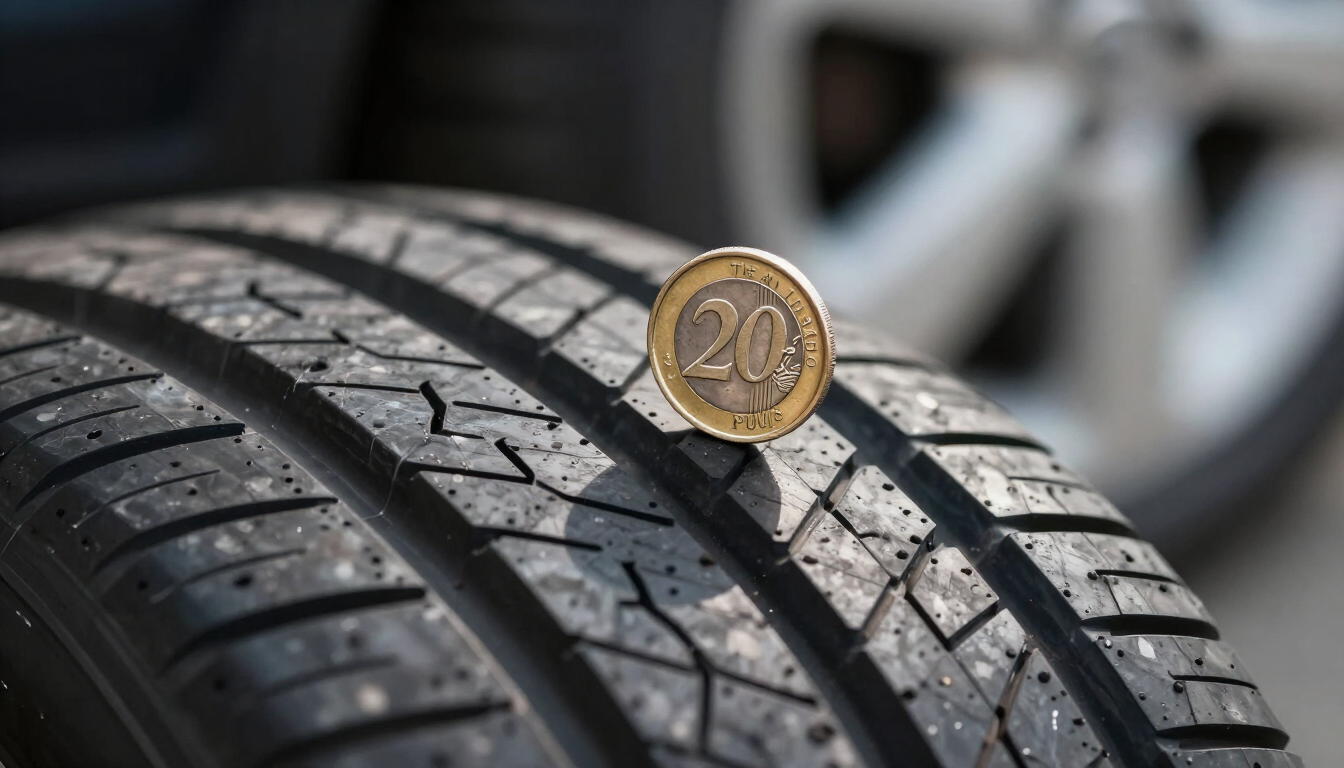
A tyre does not need to be flat to be dangerous. The four contact patches — each roughly the size of a postcard — are everything that stands between your car and the road surface. When the rubber is worn, aged or damaged, braking, steering and wet-weather grip all suffer, long before the tyre actually fails.
The legal limit and the 20p test
In the UK the legal minimum tread depth is 1.6mm across the central three-quarters of the tread. The quick way to check at home is the 20p test: insert a 20p coin into the main tread grooves; if you can see the outer band of the coin, the tread is approaching the limit and the tyre should be replaced.
In practice, grip in the wet drops off sharply below 3mm. Many drivers choose to replace tyres before the legal limit for that reason — particularly before winter, when standing water raises the risk of aquaplaning.
Damage you should not drive on
- Bulges or blisters on the sidewall — the internal structure has failed.
- Cuts or deep cracks in the sidewall, or exposed cords.
- A puncture in the sidewall — these cannot be repaired safely.
- Objects embedded in the tread, even if the tyre still holds air.
- Vibration or a pull that appeared suddenly after a journey.
Age matters too
Rubber degrades with time even when the car is barely driven. Most manufacturers recommend replacing tyres at around ten years from the date of manufacture, regardless of tread. The date is printed on the sidewall in a four-digit DOT code — the first two digits are the week, the last two the year.
If in doubt, do not drive on it. A tyre inspection at your driveway is cheaper than a blowout on the A38.
Not sure whether a tyre needs replacing? Send a photo and your location through the enquiry form on the home page, or call 07778 496767. We will come out, inspect the tyre on the vehicle, and advise honestly — replacing it on the spot if it is past its safe life.
- 24 hour mobile tyre fitting in Gloucester — how it works
- How to check your tyre pressure (and why it matters)
Need tyre help now?
We come to you — day or night.
Mobile tyre fitting and emergency call-outs across Gloucester and the GL postcodes. Share your location and we will be on the way.
Keep reading
All articles
TPMS Tyre Sensors Explained: What the Warning Light Means and What to Do
A TPMS warning light is not something to ignore — but it is rarely an emergency in itself. Here is what a tyre pressure monitoring system does, why the light comes on, and the safe steps to take before you drive on.
How Much Does Emergency Mobile Tyre Fitting Cost in Gloucester?
There is no single fixed price for an emergency mobile tyre fitting in Gloucester — the cost depends on the tyre, the vehicle, where you are and when you call. Here is exactly what affects the quote, and how to get an honest, up-to-date price.
Flat Tyre on the M5 or A40 Around Gloucester: Exactly What to Do
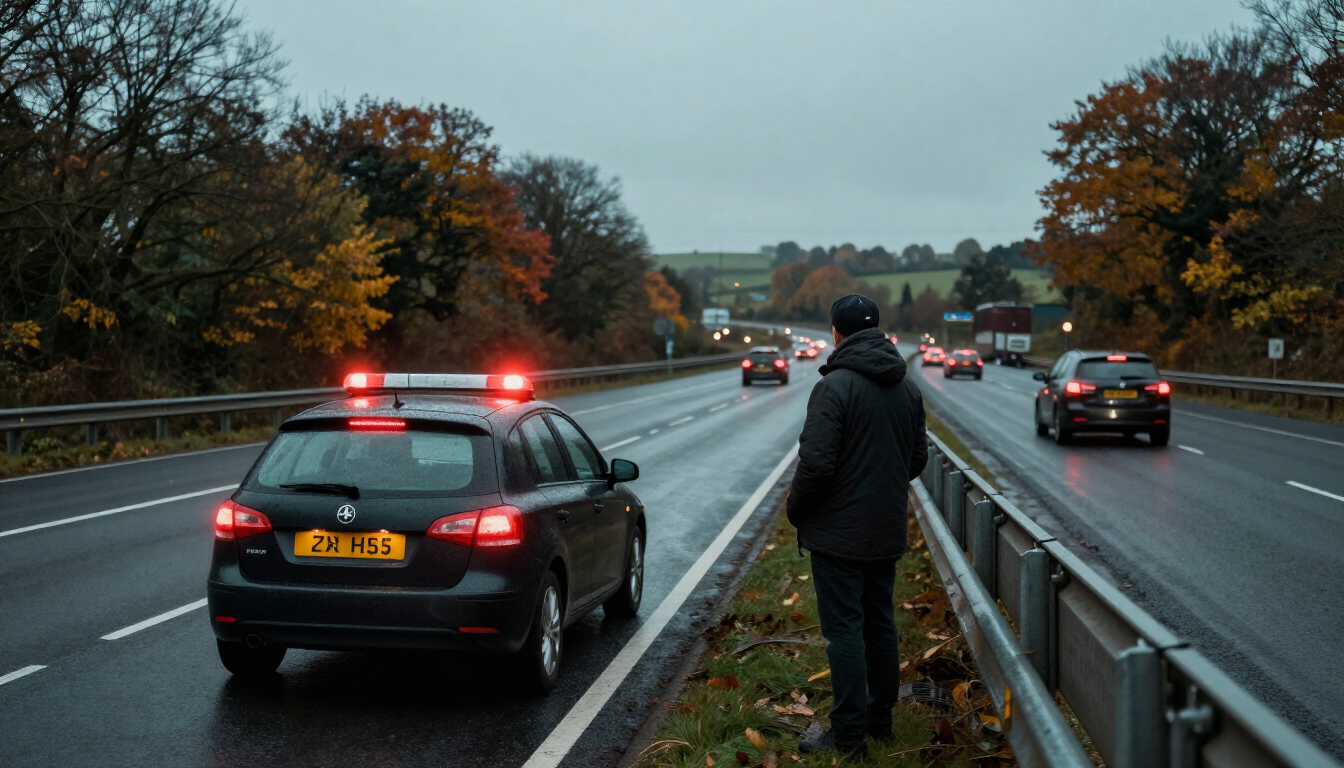
A flat or blown tyre on the M5 or the A40 near Gloucester is frightening, but a clear plan keeps you safe. Here is the step-by-step roadside routine — get safe first, then call for help — with the official guidance to back it up.